
Who we are
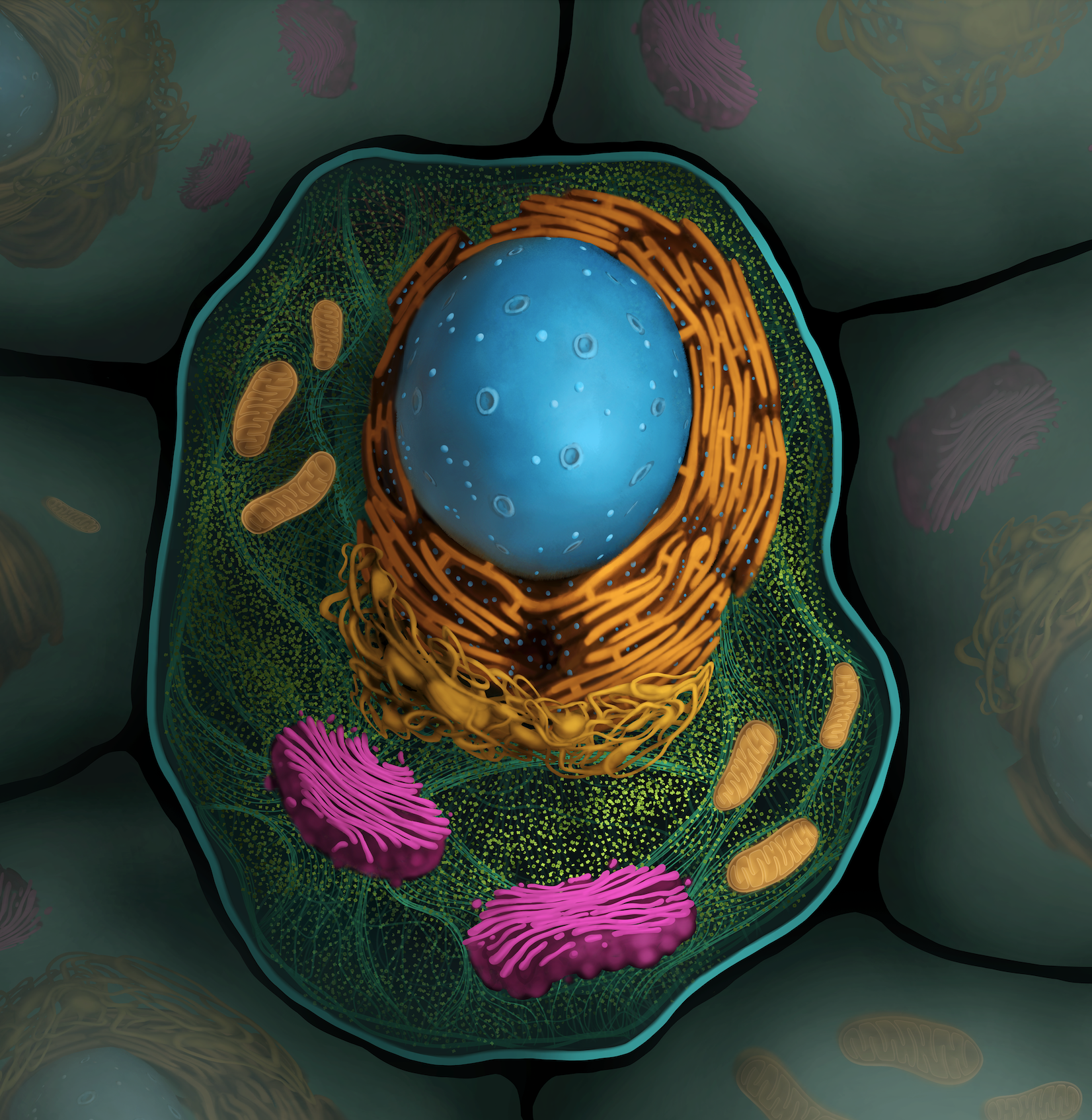
The Stark (formerly Genetic) Science Learning Center is a premier science and health education, communication, and research studio.
We partner with scientists and educators who understand the power of clear communication. We make science and health easier to understand.
Science and health can feel daunting. We get it. But it doesn’t have to be confusing. We show our audiences that science is elegant and illuminating.
Our team includes teachers, writers, artists, animators, programmers, researchers, and media producers.
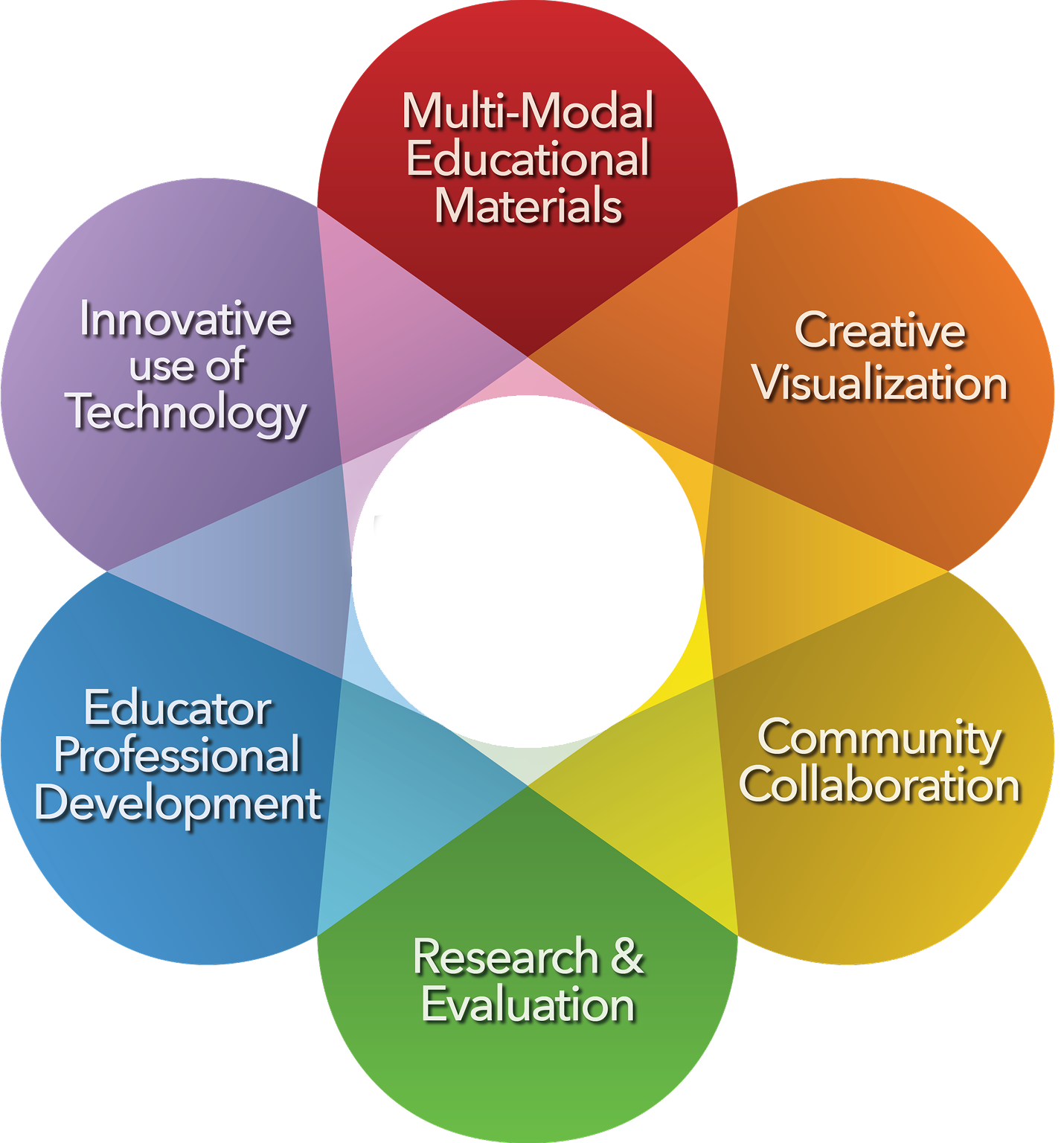
Our comprehensive communication solutions feature in-house video, music, art, web services, instructional design, writing, and evaluation.
Mission and values
Science literacy helps all of us make better choices every day.
Students need solid scientific thinking skills, whether or not they pursue a STEM career. Patients need to know how basic biology works, so they can talk about treatment options with their doctors. The public needs to know how to interpret and weigh the science they see in news stories and the claims they see in advertisements.
We believe science is more about applying findings to improve lives than about memorizing intricate details from a textbook.
Our work is grounded in scientific accuracy and driven by thoughtful instructional design, visionary artwork, and masterful technical production expertise.
We build experiences that spark curiosity and yield educational results.
We contribute to innovative models of science education that deeply integrate national science standards, higher-order thinking skills, societal impacts, and experiential learning.
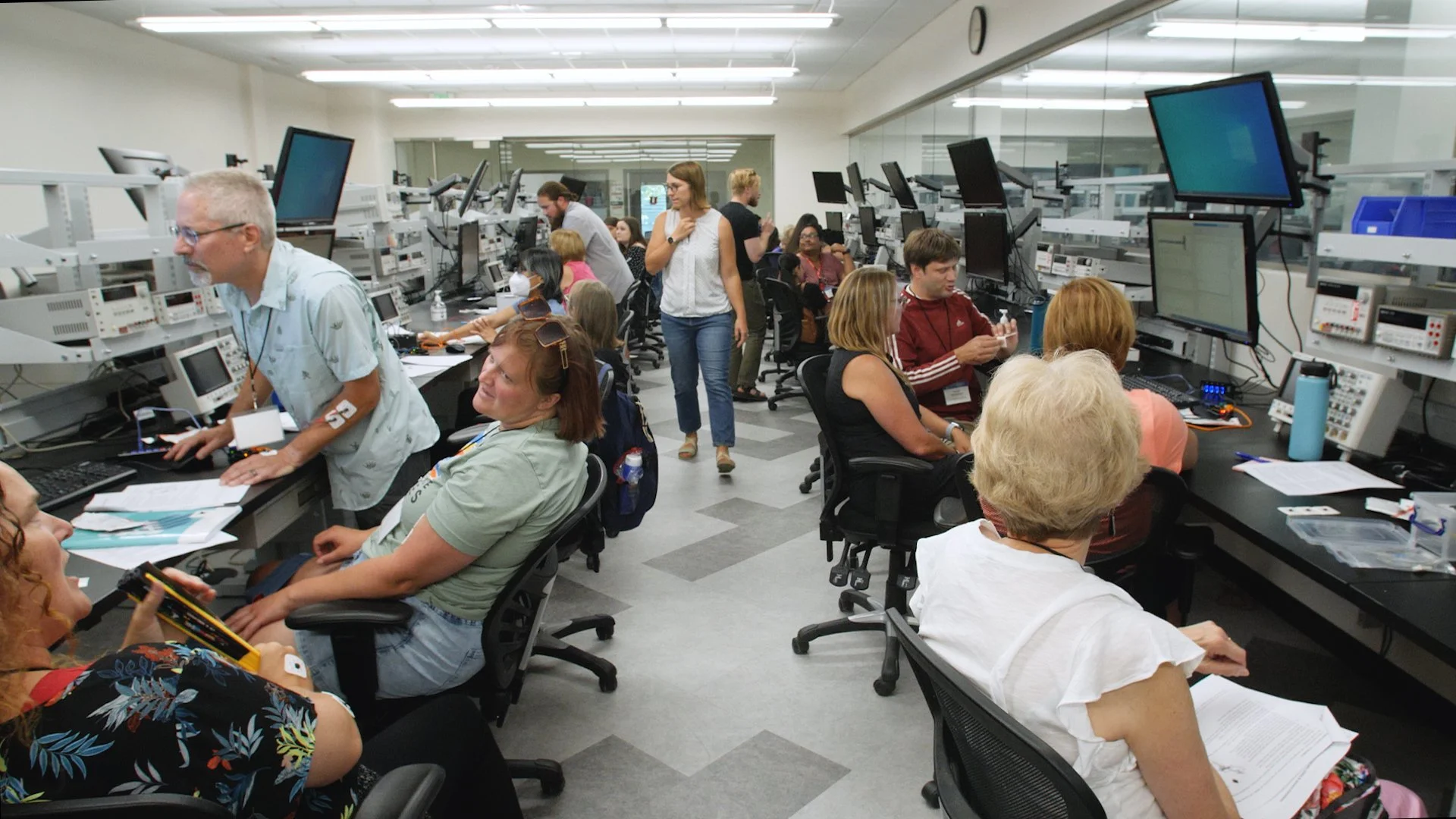
We test our materials in real classrooms and with real teachers and students to ensure that our products aid learning and understanding.
How we do it
Our creative process is well-honed after decades of building science communication modules and materials. With accuracy, clarity, and user experience as our highest priorities, each member of the SSLC team brings their deep expertise to designing and creating high-quality content.
We partner with researchers, groups, or centers that have specific science communication or content production needs. Here’s what you can expect when you work with us:
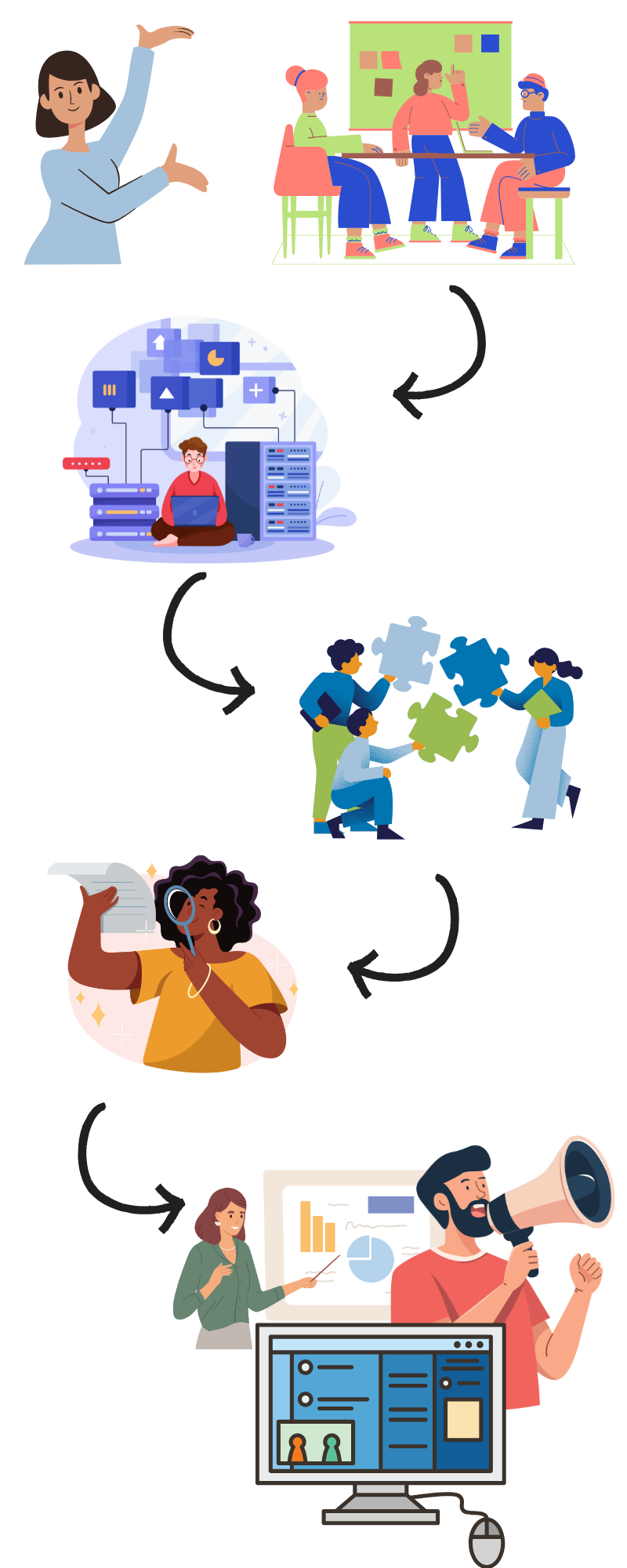
We listen and learn
We start by listening to our clients’ needs and to community voices. Sometimes this means focus groups with patients. Or co-design institutes with teachers.
We bring scientific thinking to each project. Our team of researchers and learning experts partners with specialists to ensure accuracy and precision in everything we create.
We plan
We define what we want a project to accomplish for our audience-what we want them to take away from our products. These learning objectives are our guiding stars.
We bring together our best ideas about design, function, and the audience experience. We learn from each other’s creative specialties and viewpoints. We check in frequently with clients to make sure we’re meeting their vision and needs.
We create
Then we get to work. We interpret the language and concepts of science and health for a wide range of audiences. Words, videos, illustrations, interactives, animations, music, and sound bring invisible or intangible scientific concepts into vibrant life.
We study
We design and implement studies to quantify the educational value of our clients’ materials. We publish our findings to share with the science education community.
We share
We work directly with educators at conferences, workshops, and institutes to disseminate materials and modules.
The world interacts with the SSLC through our websites, Learn.Genetics.utah.edu and Teach.Genetics.utah.edu. We’re continually working behind the scenes to make our sites fast and efficient.
How are we funded?
Whether you already have funding or just have an idea, we’d love to work together.
Sometimes collaborators approach us with their own funding to develop a project, often for outreach activities or Broader Impacts.
We also work with collaborators who have ideas for a project but are still working to secure funding. We add our expertise, resources, and ideas to help strengthen proposals and applications.
We secure funding from federal and other grants, with $34 million in awards in more than 30 years
Our history
1994 - With funding from the Howard Hughes Medical Institute, the University of Utah's Spencer Fox Eccles School of Medicine, Eccles Institute of Human Genetics, and Utah Museum of Natural History begin a collaboration focused on education for K-12 students and teachers.
1995 - The Center launches a website, titled The Natural History of Genes. It’s one of the first science education sites on the Internet.
1999 - Teachers participate in a 5-day biotechnology summer course, funded by the Utah State Office of Education, in which they build classroom sets of gel electrophoresis chambers and are introduced to related curricula. The Center continues to offer in-person teacher professional learning courses and programs.
2001 - The Genetic Science Learning Center becomes an official center at the University of Utah.
2001 - The GSLC receives its first, 5-year grant from the National Institutes of Health (NIH) Science Education Partnership Award (SEPA) Program. It has had continuous SEPA funding since this time.
2001 -The Center brings together local secondary school teachers in a curriculum co-design summer institute. Several years later, GSLC summer institutes grow to include teachers from around the country. In these institutes, which have continued nearly every year, teachers learn from subject matter experts and design the curriculum they want to see in their classrooms. GSLC staff use the teachers’ designs as guidelines to develop the content that appears on its websites.
2002 - A five-year grant from the NIH National Institute on Drug Abuse funds creation of modules explaining basic neuroscience and the science of addiction. Part of this work includes Mouse Party, the GSLC’s most popular activity. Users explore the effects of drugs of addiction on the brain by interacting with animated mice. The animation has sparked online discussions about the impacts of drugs of addiction on the brain in multiple languages.
2006 - The GSLC organizes its first SciEd, an annual conference for NIH-funded science education projects. The conference continues to bring together ~250 people focused on PK-12 and public science education to share successes, resources, and lessons learned.
2008 - An ongoing collaboration with University of Utah researchers in the Department of Pediatrics and the College of Nursing develops educational materials for new parents about newborn genetic screening and the use of residual dried blood spots for research. These have included videos, an app, and print materials available in English, Spanish, and Arabic. It’s one of many patient education efforts the GSLC has supported.
2008 - A new website, Teach.Genetics.utah.edu, launches. The site organizes activities into teacher-friendly units and modules with hands-on student activities, lesson plans, and other supports.
2009 - The GSLC conducts its first randomized controlled trial to study the effectiveness of curriculum materials for student learning. Previous studies had used quasi-experimental research designs. This research effort continues today, ensuring that materials are research-backed and effective at increasing students’ and other users’ knowledge and meeting science education standards. GSLC researchers regularly publish their findings in journals for science education researchers, education practitioners, scientists, and other audiences.
2009 - On October 30th, the GSLC’s Cell Size and Scale interactive is the eighth most popular page on the Internet for part of the day. It is the twelfth most popular page for the day overall. The animation sparks many online discussions about science.
2010 - The GSLC receives the first Science Prize for Resources in Education (SPORE) award from Science Magazine and the American Association for the Advancement of Science (AAAS). The New York Times, Science, and other media covers the award.
2011 - The GSLC expands its work into math education, developing videos for a course taken by high school students for university credit. Several of the introductory videos are also available on Learn.Genetics.
2011 - The GSLC extends its curriculum development expertise to Earth science, producing materials on models and water in the West via collaborations with researchers in Utah and Wyoming.
2012 - The GSLC receives its first grant funded by the National Science Foundation (NSF) through the Discovery Research PreK-12 (DRK-12) program. A series of DRK-12 grants fund development and rigorous testing of curricula for middle and high school that integrate heredity and evolution concepts. These and all subsequent curricula are aligned with the Next Generation Science Standards (NGSS).
2012 - The GSLC develops an informed consent video for a College of Nursing project. This leads to other collaborations with researchers to develop simplified informed consent materials.
2013 - A collaboration with U Biology professor Michael Shapiro, PhD funds development of the interactive game Pigeonetics. The game teaches principles of inheritance along with the genetics of pigeon breeding. The GSLC continues to collaborate with researchers to help their work find a larger audience and a role in science education.
2014 - Teachers are introduced to GSLC-produced and classroom tested curriculum materials via an online “dissemination” course on The Human Microbiome. Virtual courses such as this one enable many more teachers to learn about new materials than could attend the previous in-person courses. The GSLC continues to offer at least one online course per year.
2017 - The GSLC develops its first materials on plant biology through a collaboration with Joshua Udall, PhD, a professor at Brigham Young University who studied variation in the genomes of cotton plants. This section of the GSLC’s websites continues to grow through collaborations with researchers who seek to expand the impact of their research (i.e., NSF Broader Impacts).
2018 - Utilizing its evaluation expertise, the GSLC’s Research and Evaluation Team begins serving as the external evaluator for several “training grants” at the University of Utah that focus on preparing undergraduate and graduate students for research careers. This work has expanded to providing evaluation services for other institutions.
2019 - The GSLC brings its expertise to developing educational materials on genetics, genomics, and precision medicine for participants and potential participants in the NIH All of Us Research Program. This collaboration also results in a curriculum module on Exploring Big Data.
2020 - In collaboration with a team of researchers led by Rebecca Utz, PhD, a professor of Sociology, the GSLC develops the TLC: Time for Living and Caring website. The TLC program is designed to help caregivers more effectively use their respite time.
2024 - Taking advantage of new expertise on its team, the GSLC produces its first geology module in collaboration with Fan-Chi Lin, PhD, Associate Professor of Geology and Geophysics at the U. These materials draw on Dr. Lin’s NSF-funded research in Yellowstone National Park, making key concepts available to the public.
2024 - Utilizing its expertise in instructional design, the GSLC develops online courses for the Utah Center for Promotion of Work Equity Research (U-POWER) and the Care Process Model for Pediatric Traumatic Stress.
2025 - Inspired by East Coast science festivals, the GSLC hosts its first-ever Summer Science Day. Around 1,000 members of the public of all ages gathered on a Saturday in July to tour labs, try out demos, and hear researchers' stories.
2026 - To honor retiring director Louisa Stark and to reflect the broadened range of science content on the site, the GSLC becomes the Stark Science Learning Center.
Contact us
Tell us about your science communication or education needs. We will reach out shortly to discuss solutions.